Recruit-Hire-Retain: Navigating COVID-19 staffing challenges in behavioral healthcare

Mat Roosa, LCSW-R
NIATx Coach

“Our program is fully staffed with a diverse and skilled team. Our team members usually stay for a long time, but when a staff member does leave, we are able to quickly hire a qualified replacement.”

How many of today’s leaders in behavioral health can make such a claim? 

Could this assertion become your reality in today’s challenging environment?

High demand for services, macro-economic factors, and staff burnout have left supervisors scrambling to fill open positions and pulling double shifts to cover the holes in the staffing schedule. I spoke recently with a residential program supervisor about these challenges, and she quietly began to cry over the futility of her daily efforts to deliver the care she felt so committed to providing. 

This personal toll on staff leads to the economic challenge of high-cost staff turnover, as systems spend resources on the constant cycle of hiring, training, and lost productivity. 

The NIATx Answer


For almost 20 years, behavioral health providers have used the NIATx model to tackle a wide array of challenges. Our signature training, The NIATx Change Leader Academy (CLA), has trained thousands of individuals to use NIATx tools to increase client access and retention, build cultural intelligence, strengthen peer recovery services, and adopt and implement evidence-based practices. 

In 2022, we are focusing the NIATx CLA training lens on special topics, including the COVID workforce challenge. 

The NIATx Change Leader Academy-COVID Workforce Challenges (March 8-29) will address the three core workforce challenges of staff recruitment, hiring, and retention. In addition, participants will learn how to develop change projects to test improvements related to key staffing questions:

1. What can we do to increase the number of eligible applicants who apply for positions?

2. How can we ensure that the desired candidates accept our employment offers?

3. What actions can we take that will increase the length of employee service? 

Join us!

The NIATx process improvement tools you’ll learn in the CLA work for any quality improvement needs. Many organizations report that simply engaging staff members on NIATx change teams—regardless of the change topic—helps retain staff. Team members experience increased job satisfaction and engagement with their peers as they work together to achieve measurable improvements in service delivery.  

Now is the time to explore how NIATx can aid your recruitment, hiring, and retention efforts. Join us to learn how to use rapid cycle PDSA testing to find the best staffing strategies for your organization.

Learn more and register for the NIATx Change Leader Academy Special Focus: COVID Workforce Challenges

Mat Roosa was a founding member of NIATx and has been a NIATx coach for a wide range of projects. He works as a consultant in quality improvement, organizational development and planning, and implementing evidence-based practices. Mat also serves as a local government planner in behavioral health in New York state. His experience includes direct clinical practice in mental health and substance use services, teaching at the undergraduate and graduate levels, and human service agency administration. You can reach Mat at matroosa@gmail.com.


Change Project 911 In Review

Thank you for coming along on this Change Project 911 journey with Mat Roosa, the guest blogger for the series. Below you will find a list of all the Change Project 911 NIATx series with a short blurb. Select the title to read the full content of each blog.


Help! My Project is Dragging on Too Long

Posted December 29, 2020

Change projects are not meant to be open-ended. They’re meant to move quickly and efficiently to extract the maximum benefits. Dave Gustafson, who developed the NIATx model, recommends limiting change projects to no more than a few weeks. Some change projects can be completed successfully in as little as a day. If you find your team in the middle of a never-ending project, try to diagnose the root cause that’s derailing the project.
Any one of these underlying problems could make a change project drag on. . .


Help! My Change Team has lost its energy!

Posted February 10, 2021

Sometimes a change team can feel like a phone with only 2 percent battery life left. Some teams start with a full charge that drains through time. Other teams get started with a lower level of energy and go downhill from there. The challenge of COVID-19 and other competing priorities and stressors can quickly diminish a change team’s energy and divert attention from the change project. The fix. . .


Help! Our change project is unmanageable!

Posted March 15, 2021

Basket or cart?

It’s the first decision we usually make when we enter a large grocery store. When I am just buying a few items, I usually pick up a basket so that I can move more easily through the store. Often I find myself with a gallon of milk in one hand, an overflowing too heavy basket in the other, and wondering why I did not get a cart in the first place. So, what can we do to keep from overloading the process?. . .


What to Do When the Idea Well Has Run Dry

Posted April 8, 2021

Generating change ideas requires time and energy. Teams lose momentum when initial change efforts don’t succeed, and then struggle to develop option B (or C) to continue their improvement efforts. As teams attempt to move multiple priorities forward, they lose energy to exploring new ideas. Worst case scenario? They feel like just giving up and tolerating the problematic status quo.

So what is a busy team with limited resources to do? How can your team develop a new vision? The five ideas that follow can help organizations to generate new ideas to get the change process moving again. . .


The Incomplete Walk-through

Posted May 24, 2021

Understand and involve the customer.

This is the first and most important of the five NIATx principles. Much of our NIATx work involves working to understand the customer/client/patient experience—because the customer experience is the critical factor in all service delivery. Strategies to understand and involve the customer can include client interviews, focus groups, or including clients on a change team. . .


Counting what Counts: Addressing the challenge of incomplete data collection

Posted July 23, 2021 

“Help! We don’t know if our change is an improvement!”

At the foundation of all quality improvement work lies data.

Imagine driving down a twisty road at night and having your headlights turned off for a portion of the journey. That’s what happens when we try to manage a change project without consistent data access. It can be helpful to think about the data needed to steer a change in three stages:. . .


When Your Rapid-cycle PDSA is Not Working

Posted August 26, 2021 

Rapid-Cycle Plan-Do-Study-ACT (PDSA) is a powerful tool for improvement that can enable a team or organization to achieve its short-term goals and move toward long-term success. But sometimes, PDSA change cycles do not yield the desired results. Here are a few questions to consider when your change project does not achieve the goal. . .


Help! How do we deal with change project interruptions?

Posted September 17, 2021

Maintaining forward momentum on top priorities

Once your team has developed a change project and you have strong executive support, it might seem like things should be smooth sailing. But there are a number of ways that a strong project can be blown off course. . .


Customers don’t notice improvements

Posted October 18, 2021

How do we know if a change is an improvement?

Change teams and change leaders ask this question frequently. It often refers to the measures and data they’re using to monitor change results.

But there is another and perhaps more meaningful way to ask this question: How do our customers know that a change is an improvement? . . .


Unable to sustain a change

Posted November 19, 2021 

“It’s easy to quit drinking. I’ve done it a thousand times.”   W.C. Fields

Change is easy. Sustaining change is not so easy. This is true for personal changes like quitting smoking, exercising more, driving slower, or keeping the house more organized. It is also true for workplace systems changes, such as implementing new policies and procedures. Too often, despite our best intention, we end up like Sisyphus, doing our best to roll the change up the hill, only to see it slide back down. . .


No Time for a Change Project: Finding Time vs. Making Choices

Posted January 3, 2022

Why do so many good change ideas end up at the bottom of the pile? Why do most teams struggle to find the time, energy, and people to implement change projects? Many teams are convinced that they cannot control the urgent needs, staffing and fiscal resource demands, and other obstacles that get in the way of change implementation.  This might be because they are asking the wrong question. . .


About our Guest Blogger


Mat Roosa, LCSW-R was a founding member of NIATx and has been a NIATx coach for a wide range of projects. He works as a consultant in quality improvement, organizational development and planning, and implementing evidence-based practices. His experience includes direct clinical practice in mental health and substance use services, teaching at the undergraduate and graduate levels, and human service agency administration. You can reach Mat (Change Project SOS) at matroosa@gmail.com.

Change Project 911: No Time for a Change Project: Finding Time vs. Making Choices

Mat Roosa, LCSW-R
NIATx Coach

“The change seems like a good idea, but we just don’t have the time to do it. Let’s come back to this next year when we have more resources."

No time for a change project:
Finding time vs. making choices

Why do so many good change ideas end up at the bottom of the pile? Why do most teams struggle to find the time, energy, and people to implement change projects? Many teams are convinced that they cannot control the urgent needs, staffing and fiscal resource demands, and other obstacles that get in the way of change implementation.  This might be because they are asking the wrong question.


Instead of asking, “Do we have the time to take on this new project?” teams and leaders should be asking, “Which projects should we choose?”.


While we may be short on time, we can choose how we’ll spend it. The four steps below can help you choose which project to pursue. Apply these strategies to both current and potential projects periodically to ensure that you create time for the critical projects and let go of the rest.  


  1. Consider the return on investment of a potential change project before implementing the change.
  2. Prioritize a manageable number of activities for action to ensure that you have the resources to complete the change project successfully.
  3. Cultivate urgency within your team to foster focus and action.
  4. Use tested practices to unite the team and sustain action to implement the project.

ROI: Understanding pros and cons and the value of the change

In keeping with a motivational Interviewing model, we are all ambivalent about most of our decisions. This includes decisions to invest in change projects. It can be helpful to use a decision balance exercise with your team regarding the pros and cons of moving forward with the change project. How valuable will this change project be for our team?

"Why should we do the change?" and "What will we lose if we fail to do this change?" balanced with "Why should we avoid the change?" and "What will we lose if we do the change?"


Priority: If everything is a priority, then nothing is a priority.

Once you have determined a strong ROI for completing a change, then you need to find a way to make it happen. Most of us have too many priorities and struggle to move them forward in a timely fashion. There are only so many projects that you and your team can complete successfully, and that number is probably smaller than you think it is. To succeed with a change implementation, we need to decide what we want to do. We also need to decide what needs to come off our list to ensure that the priority projects are completed.  


Urgency: the burning platform

Most of us, most of the time, have a bias toward the status quo. Unless there is a convincing reason to change, we tend to favor options that we know over those less familiar. Known things are more comfortable, even when they are not useful, or even dangerous. New and unknown things are stressful, even when they are likely to provide us with great benefits.

Change requires a felt sense of urgency. Many have used the story of the burning platform to understand the importance of urgency. Imagine that you are on a platform in the ocean, a mile from the shore. You are told that you need to jump into the water and swim to shore. You will likely hesitate and consider all the risks related to this swim. Will you be hurt jumping off the high platform? Can you swim that far? Is there a current? Are their sharks in the water? Etc.

Now imagine that the platform is on fire, and flames are spreading toward the edge where you stand. You may pause briefly, but then you will jump and do your best to swim toward the shore. 

The challenge of urgency is that most of us do not experience the clear danger of a burning platform. The need for change is rarely as obvious as when the window of opportunity to make beneficial changes has closed. Leaders need to understand the risks of inaction and the rewards for action and communicate these in a way that cultivates urgency for the team. Leaders should never “light a fire” to get their team to jump, but they need to be able to point to the obvious risks of inaction.  


Tested Practices: Do what works to find the time. 

Once you have found a project with a high ROI, and have cultivated urgency for this new priority, you are ready to implement the change. Effective team implementation requires that you:  

  • Collaborate with the team to harness the energy and skills of a diverse group. 
  • Delegate elements of the project to ensure team engagement and to spread responsibility so that the project is more manageable. 
  • Use existing infrastructures such as staff meetings and supervisory processes to steer the change project. This prevents the need to find additional time to work on the project. 

There is always time for the most valuable priorities. Hopefully these ideas will help you define priority changes and then take action to get them done.


Planning a change project in 2022? 

A key role in the NIATx model is the Change Leader. Teams are also encouraged to assign a data coordinator, who gathers and presents the change project data. The Sustain Leader plays another key role for Change Teams. Assigning a  Sustain Leader responsible for creating a sustainment plan is the clearest path to making sustaining the change a priority for your team.

Join an upcoming NIATx Change Leader Academy! View the complete 2022 NIATx Change Leader Academy Training Schedule.


About Change Project 911

Change Project 911 is a monthly blog post series covering common change project barriers and how to address them. Has your change project hit a snag that you’re not sure to tackle? Share your issue in the comments section below, or email Change Project 911 at matroosa@gmail.comWe’ll offer solutions from our team of change project experts!


About our Guest Blogger


Mat Roosa was a founding member of NIATx and has been a NIATx coach for a wide range of projects. He works as a consultant in quality improvement, organizational development and planning, and implementing evidence-based practices. His experience includes direct clinical practice in mental health and substance use services, teaching at the undergraduate and graduate levels, and human service agency administration. You can reach Mat (Change Project SOS) at matroosa@gmail.com.


A Storied Career: Interview with 2021 NAADAC Enlightenment Award Winner, Mark Sanders

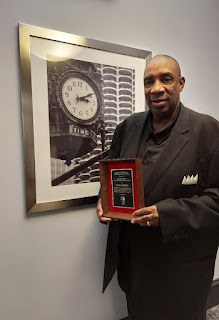
Photo of Mark Sanders

 
Mark Sanders, LCSW, CADC, is the Illinois State Project Manager for the Great Lakes ATTC, MHTTC, and PTTC. Mark is a published author, trainer, educator, and mentor, as well as the founder of the Online Museum of African American Addictions, Treatment, and Recovery and the co-founder of Serenity Academy of Chicago, the only recovery high school in Illinois. 


If you have never attended a training hosted by Mark Sanders, you're missing out. Mark has a unique ability to be at once both energizing and reassuring. His presentations are equal parts inspiration and intellect – a captivating mix of stories, memoire, and facts. He has motivated and educated countless members of the SUD workforce throughout his nearly 40-year career. For these reasons and many more, Mark Sanders, LCSW, CADC, has been selected as the recipient of the 2021 NAADAC Enlightenment Award, the 2021 Community Behavioral Healthcare Association of Illinois Frank Anselmo Lifetime Achievement Award, and the Illinois Association for Behavioral Health’s 2021 Lawrence Goodman Friend of the Field Award.   

The Great Lakes ATTC, MHTTC, and PTTC congratulate our colleague, Mark Sanders, on these well-deserved awards for his many years of exemplary service and leadership. In celebration of his accomplishments, we asked Mark to share his thoughts on the field of SUD recovery services and how he has achieved success throughout his career.
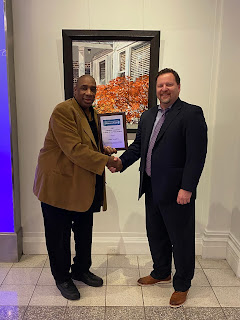
Mark Sanders accepting the Lawrence Goodman Friend of the Field Award
Lawrence Goodman Friend of the Field Award
Mark Sanders accepting the Frank Anselmo Lifetime Achievement Award
Frank Anselmo Lifetime Achievement Award


What inspired you to enter the fields of social work and substance use disorder recovery services? 

I graduated from my undergraduate program at 21 years old with a bachelor’s degree in social work and sociology. It's January and I'm standing at a bus stop with no job, a diploma underneath my arm, and I see a blinking neon sign that says, “Youth Center.” So, I walked in. As I waited to speak with someone, I noticed some books stacked in the corner of the room. I figured I may as well read while I wait, and the book I picked up was Another Chance [sic] by Sharon Wegscheider-Cruse. She talked about addiction, alcoholism, and families with roles like those of my own family members. I came from a family with lots of alcohol use disorder and substance use disorder, and I saw my family in that book. 

Eventually, I spoke with a member of the adolescent substance use disorders program at this youth center. I asked if they had any openings for counselors. They said they needed a strong male counselor, and I thought to myself, I don't know how strong I am, but I am a male counselor. And so, I was hired. For 39 years, I've been in this particular industry, helping individuals with their recovery. What’s kept me going is seeing the many clients over the years who have achieved recovery. I often think of the famous saying, “The flap of a butterfly's wings in Brazil can cause an earthquake in Texas,” and what I've come to realize is each time a client recovers, they go on to help others. The work never ends, and the results are magnified.

How have you seen the substance use disorder field change over time?

When I first became a counselor, we had one technique with clients: confrontation. Early in my career, I learned that a good substance use disorders counselor should be like a prosecuting attorney, like Perry Mason, and our job is to cross examine clients to get them to confess it all. What we’ve learned years later is that approach doesn’t work. The field has transitioned to using evidence-based practices, such as motivational interviewing and multiple pathways of recovery, and this has greatly improved our clients’ ability to achieve positive outcomes.

Another big change that occurred is in our language and the way we talk about substance use disorders. There is a Native American phrase that says, “If you want to appreciate something, call it a flower. If you want to destroy it, call it a weed.” Practitioners began using fewer stigmatizing words and phrases and doing so helped reframe our understanding of substance use disorder as a chronic condition, like cancer and diabetes, and not a moral failing. We’ve discovered that more and more people are seeking help because we are reducing stigma through language alone.

Is there one expert or scholar who's inspired you or guided you?

Yes – my mentor, William White.  He's known by many as a substance use disorders professional historian, but when I first met him, he was a trainer. Decades ago, I told my friends and colleagues that I wanted to be a trainer. Everyone said, if you want to be a trainer, you need to meet William White. He’s so charismatic – amongst the best trainers in our field.

One Friday night, William was hosting a workshop. I showed up, shy and nervous to approach him because of his reputation, but eventually, I introduced myself to him. He was so approachable and easy to talk to. We had lunch and he shared his knowledge with me and answered all my questions. He inspired me to become a mentor myself. One of the greatest lessons he passed down to me is that people who are truly grateful for what they've learned from this profession freely give it away. They pass it forward to the next generation.

What advice would you give to future social workers and counselors? 

Many people who enter this profession feel they’ve been called to do this work. You may be so busy working, trying to save human souls and help people recover, that you forget to take care of yourself. My advice for you is to take a break every day. Take your whole lunch hour. Treat your evenings and weekends as sacred time. Rest and replenish yourself so you can continue helping people without sacrificing your own wellbeing. 

Another piece of advice that I’d offer to future professionals is that it’s important you understand the history of what happened before you entered the field. You will be more successful in building up this profession if you understand its history. 

What are some things that you do for your own self-care?

I enjoy quiet time. I listen to music. I take walks. I like to relax and watch Netflix. I spend time with friends –  that's really, really important to me. You see, at my age now, if I live as long as most African American men, I only have about 450 weekends left. I need to enjoy the time I spend with my family and friends, and my weekends have to count. 

What are you most excited about as you go forward in this part of your career?

Part of my legacy is the Online Museum of African American Addictions, Treatment, and Recovery. I intend to keep building that website so that clinicians coming into the profession will have culturally relevant information about working with African Americans with substance use disorders. 

I’m also really passionate about the importance of quality clinical supervision. You can’t implement evidence-based practices unless there's quality clinical supervision. 

Finally, I’m excited about welcoming the next generation of professionals to the field and making sure we leave them the tools and information they’ll need to be able to move the field forward. 

Change Project 911: Unable to sustain a change

Mat Roosa, LCSW-R
NIATx Coach

“It’s easy to quit drinking. I’ve done it a thousand times.”   W.C. Fields

Change is easy. Sustaining change is not so easy. This is true for personal changes like quitting smoking, exercising more, driving slower, or keeping the house more organized. It is also true for workplace systems changes, such as implementing new policies and procedures. Too often, despite our best intention, we end up like Sisyphus, doing our best to roll the change up the hill, only to see it slide back down.  

The NIATx rapid-cycle PDSA change model emphasizes making changes that you can measure and implement quickly. Sometimes, change teams think of the process as a quick sprint to change. But sustaining a change (sustainment) is more like a long-distance run. So here are a few things you can do to pace yourself to sustain your change project gains. 

Create a sustain plan

Sustainment rarely happens without a clear sustainment plan. Just as inpatient hospital care should include discharge planning at admission, change projects should start sustainment planning at the beginning of the change. Build the sustainment conversation into the change project planning, and use the elements below to ensure sustainment success. 


Keep meeting

NIATx change teams meet frequently when developing and implementing a change project. Too often, these teams disband prematurely at the end of the change implementation. Schedule ongoing—but less frequent—change team meetings to monitor the successful change. 


Track the data

Many successful change sustainment teams develop a data dashboard for tracking key change metrics. Periodic review of the data helps decision-makers take action when the data reflects a drift from the new practice. Teams can set parameters that will trigger actions: If metric x drops below level Y, we will do Z, etc.


Engage new staff

Staff turnover poses a primary challenge to sustainment. Initial implementors leave, often replaced by staff who have no knowledge or investment in the new practice. Offset this issue and sustain the new practice by building it into your organization’s policy and procedures and new staff training. In addition, learning the history story of successful change projects helps new staff to appreciate the work that has come before them and will motivate them to sustain the improvements.


Assign a Sustain Leader

A key role in the NIATx model is the Change Leader. Teams are also encouraged to assign a data coordinator, who gathers and presents the change project data. The Sustain Leader plays another key role for Change Teams. Assigning a  Sustain Leader responsible for creating a sustainment plan is the clearest path to making sustaining the change a priority for your team.


Focus on ROI

Change teams feel frustrated when they see the progress of a successful change project fading—or worse, reverting to the old way. Backsliding leaves the team right back where they started, with little to show for their efforts. Instead, motivate teams to sustain successful gains by celebrating progress. Announcing the successful change and honoring the change team's effort in an office newsletter or other communication can also motivate the team to sustain the improvement.


Recognize the challenge of turning the new into the norm

Most people and teams are better at starting new things than they are at sustaining new things. Humans evolved to notice risk and make rapid decisions to increase safety. Appreciating this innate wiring can help us feel greater empathy for ourselves and our team members as we work to monitor changes and enhance sustainment. 

Using the strategies above can help you to succeed in turning new changes into norms of practice. However, continuous quality improvement is not just about the implementation of change. CQI also requires an ongoing effort to sustain the changes you have already made. 


About Change Project 911

Change Project 911 is a monthly blog post series covering common change project barriers and how to address them. Has your change project hit a snag that you’re not sure to tackle? Share your issue in the comments section below, or email Change Project 911 at matroosa@gmail.comWe’ll offer solutions from our team of change project experts!

About our Guest Blogger


Mat Roosa was a founding member of NIATx and has been a NIATx coach for a wide range of projects. He works as a consultant in quality improvement, organizational development and planning, and implementing evidence-based practices. His experience includes direct clinical practice in mental health and substance use services, teaching at the undergraduate and graduate levels, and human service agency administration. You can reach Mat (Change Project SOS) at matroosa@gmail.com.