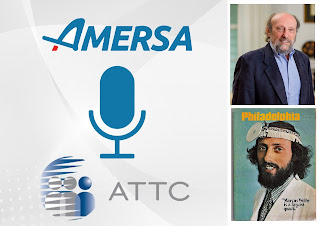


Sidney H. Schnoll, M.D., Ph.D., is an internationally recognized expert in addiction and pain management who has recently applied his experience of over 30 years in academic medicine to the issues of risk management of controlled substances. Sid was a member of the team that developed the Tramadol Independent Steering Committee (ISC), and he was the principal investigator on the health care professional surveillance project to determine rates of use of tramadol among health professionals. Sid also developed the RADARS® System to study the use and diversion of prescription opioids, which was cited by the FDA as a model risk management program. With over thirty years in academic medicine, Sid has published over 150 research papers, book chapters and educational materials. His areas of research include both addiction and pain management with special emphasis on perinatal addiction and prescription drug use.
AMERSA People & Passion, Episode 9: History of AMERSA with Sid Schnoll
Sidney H. Schnoll, M.D., Ph.D., is an internationally recognized expert in addiction and pain management who has recently applied his experience of over 30 years in academic medicine to the issues of risk management of controlled substances. Sid was a member of the team that developed the Tramadol Independent Steering Committee (ISC), and he was the principal investigator on the health care professional surveillance project to determine rates of use of tramadol among health professionals. Sid also developed the RADARS® System to study the use and diversion of prescription opioids, which was cited by the FDA as a model risk management program. With over thirty years in academic medicine, Sid has published over 150 research papers, book chapters and educational materials. His areas of research include both addiction and pain management with special emphasis on perinatal addiction and prescription drug use.
AMERSA People & Passion, Episode 8: Key Conversations: Dismantling Racism Against Black, Indigenous, and People of Color Across the Substance Use Continuum
The AMERSA Board of Directors (BOD) proposes an initial set of strategies to promote diversity, equity, and inclusion using a framework that speaks to four key AMERSA experiences: engagement, education, mentorship, and leadership. Please join Dr. Holly Hagle, Marlene Martin, and Miriam Komaromy in this podcast for a discussion on how AMERSA commits to promoting equity and inclusion to dismantle the individual, institutional, and structural racism that has pervaded the United States for centuries. Through these actions we stand in solidarity with BIPoC and all persons who use substances across the spectrum of harm reduction, prevention, intervention, treatment, and recovery; committing to promoting equity and inclusion. The AMERSA BOD cannot achieve this alone. We invite our members to join us in building an inclusive, multidisciplinary professional society equitable for all. Please visit us at AMERSA.org
Holly Hagle, Ph.D. is an Assistant Research Professor at the Collaborative to Advance Health Services, at the University of Missouri-Kansas City’s School of Nursing and Health Studies. Dr. Hagle is a proven leader and educator with over 18 years’ experience developing educational programming, curricula for traditional face-to-face and online education, supervision of staff and consultants, and the management of multi-million dollar federal grant budgets. She is the Co-Director of the National Addiction Technology Transfer Center (ATTC) Network Coordinating Office (NCO) and Principal Investigator (PI) for the Prevention Technology Transfer Center (PTTC) NCO. In addition, she is the UMKC PI, and Co-Director on behalf of the ATTC Network for the Opioid State Targeted Response Technical Assistance (STR-TA) grant. Dr. Hagle has been actively working with medical and behavioral health providers for more than 20 years on the integration of behavioral health interventions, including educational programming on intercultural sensitivity. Her area of expertise is in adolescent co-occurring disorders, screening, brief intervention, and referral to treatment, and the application of evidence-based practices in community settings with a special focus on qualitative research methods.
Marlene Martin, MD, is an Assistant Clinical Professor at UCSF and a hospitalist at San Francisco General Hospital. She is driven to improve care for populations in the safety net.
Marlene was born and raised in Los Angeles and is a first-generation college graduate. She attended college and medical school at Stanford prior to completing Internal Medicine residency at UCSF. Her bilingual and bicultural Mexican immigrant background influenced her to serve socially oppressed populations.
Marlene is board certified in addiction medicine and founded and directs the Addiction Care Team, a novel interprofessional consult service that delivers compassionate, evidence-based care for hospitalized people with unhealthy substance use. She is interested in alcohol use disorders among LatinX populations as well as eliminating the inequities faced by persons with substance use disorders.
Dr. Miriam Komaromy is an addiction medicine physician who is medical director of the Grayken Center for Addiction at Boston Medical Center, where her work focuses on all aspects of substance use disorders and the intersection between addiction and health equity. In the past she led the development of the ECHO model for education of clinical teams about how to treat substance use disorders in primary care. She currently leads a federally-funded program studying the best way to treat co-occurring addiction and mental health disorders in primary care settings.
Change Project 911: Customers don’t notice improvements
Mat Roosa, LCSW-R
NIATx Coach
How do we know if a change is an improvement?
Change teams and change leaders ask this question frequently. It often refers to the measures and data they’re using to monitor change results.But there is another and perhaps more meaningful way to ask this question: How do our customers know that a change is an improvement?
The number one NIATx Principle asks us to understand and involve the customer. The most important way to involve customers is to make sure that they are experiencing the improvements resulting from a change.
Collecting quantitative data on the change is essential, but collecting qualitative data about the customer/client/ patient experience is also essential. For example, do the results of the change create a real impact that the customer feels? Does the change make the service process more satisfying, comfortable, or useful to the people we are trying to serve?

Quality customer experience by design
Most of us try to gather customer feedback to help us to improve our services. Surveys and focus groups of service recipients can be excellent strategies for determining the impact of a change that we have implemented. Typically this feedback is gathered after the implementation to support efforts to improve a flawed process further.
Wouldn’t it be better to design the process to ensure quality in the customer experience from the beginning?
Wouldn’t it be better to gather customer experience data before developing change projects?
The best way to ensure that the customer feels the change is to engage the customer on the front end of the change development process. So what can we do to ensure that we include the customer’s values from the beginning of the change process?
Include customers on the change team
“Nothing about us without us” has been a powerful refrain in the behavioral health peer recovery movement. These words underscore the importance of including people who are receiving services or support in all decisions related to that service. Perhaps the best way to do this in a change project is to include customers on the change team. Many organizations that have adopted the NIATx model have found that a change team that consists of both service recipients and service providers generates change ideas with greater impact.
Use the “So What?” test
The history of product design is filled with clever products that excited designers but left customers saying, "So what?” Again, if we return to the NIATx principle number one, we need to know and understand the customer to develop services or make service improvements that create a strong positive customer response.
Use customer impact criteria to select a strategy
In the NIATx model, we often use Nominal Group Technique (NGT) to brainstorm change strategies to address our chosen aim. Typical NGT uses a simple return on investment criteria to select a strategy from the list generated:
What is the level of resource required to implement the strategy, and what are the expected results?
We can add to this criteria a question about customer impact to ensure that the selection process includes these critical elements: Which of these strategies will have the greatest desired impact on the customer's experience? As described above, including customers on the change team is a great way to ensure that the change project addresses customer values and priorities. In addition, customers participating in the NGT process will generate ideas that focus on customer experience.
To believe that the customer is “always right” is to believe that the customer is the first and best source for improvement ideas. Regardless of the industry or service type, customers/ clients/ patients vote with their feet. If you engage customers in building and improving your service, they will keep coming back, and you will be able to deliver the services, care, and supports that will make a difference in their lives.
About Change Project 911
Change Project 911 is a monthly blog post series covering common change project barriers and how to address them. Has your change project hit a snag that you’re not sure to tackle? Share your issue in the comments section below, or email Change Project 911 at matroosa@gmail.comWe’ll offer solutions from our team of change project experts!
About our Guest Blogger
Mat Roosa was a founding member of NIATx and has been a NIATx coach for a wide range of projects. He works as a consultant in quality improvement, organizational development and planning, and implementing evidence-based practices. His experience includes direct clinical practice in mental health and substance use services, teaching at the undergraduate and graduate levels, and human service agency administration. You can reach Mat (Change Project SOS) at matroosa@gmail.com.
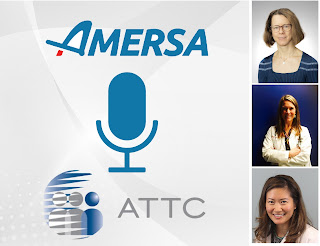
AMERSA People & Passion, Episode 7: Palliative Care: Bridging the Gap for Addiction Treatment in People with Serious Illness
Julie W. Childers, MD, graduated from the University of Pittsburgh School of Medicine in 2005 and completed residency training in internal medicine at the University of Rochester in 2008. She completed fellowship training in palliative care in 2009 and obtained a master’s degree in medical education in 2010. She began treating opioid use disorder in 2010, and in 2018 became board certified in Addiction Medicine. In addition to her work as a palliative care specialist, she attends on the inpatient Addiction Medicine Consult Service, has an active outpatient practice treating substance use disorders, and developed a new ACGME-accredited addiction medicine fellowship. She has written and taught nationally in the areas of teaching communication, motivational interviewing, medical ethics, and managing addiction in patients with serious illness.
Katie Fitzgerald Jones, BSN, MSN, APN, is a Palliative Nurse Practitioner at VA Boston Healthcare System and PhD student at Boston College Connell School of Nursing. Her clinical and research interests improve pain management, quality of life and enhance opioid safety in individuals with cancer and substance use disorder. Past clinical experience includes developing a sustainable Palliative Care Nurse Practitioner Fellowship at Dana Farber Cancer Institute and Brigham and Women’s Hospital, serving as the Palliative Nurse Director, and creating an innovative Palliative Care Program for older adults at Hebrew Senior Life. Ms. Jones has been an active member of the Palliative Care Academic Community. Over the past years has been an invited speaker at the Harvard Center for Palliative Care, the Harvard Inter-Professional Palliative Care, and the Harvard Geriatric Fellowship. Ms. Jones is a co-leader of the national hospice and palliative care buprenorphine clinical mentorship support group and research group. In her early research work- she has examined biopsychosocial factors associated with long-term opioid use in cancer survivors, parallels between Palliative Care and Substance Use Disorder Treatment, and Buprenorphine prescribing practices in Palliative Care clinicians. Her research is currently funded by the Foundation of Addiction Nursing and the National Institute of Nursing Research Predoctoral Fellowship Award (F31). She has authored several manuscripts and book chapters on the intersection between palliative care and substance use disorders and has spoken nationally on various related topics.
Dr. Janet Ho is a board-certified palliative medicine and addiction medicine physician at the University of California, San Francisco. She completed internal medicine training and chief residency at Yale, a masters in public health at Harvard, and fellowships in health services research, palliative care, and addiction medicine at Harvard, Dana Farber Cancer Institute, and Massachusetts General Hospital in Boston, MA. Her clinical and research interests lie at the intersection of serious illness, addiction, pain, and chronic cancer pain. Dr. Ho is dedicated to improving provider knowledge and confidence in primary palliative care and addiction medicine; improving disparate quality of life and care for patients with life-limiting serious illness and addiction; understanding the role of buprenorphine in palliative care; and challenging stigma against patients who use drugs. She has been invited to teach with the Harvard Center for Palliative Care, the Harvard Inter-professional Palliative care fellowship, the UCSF Division of hospital medicine, the UCSF palliative care fellowship, and has presented at several national conferences. She is a co-leader of the national buprenorphine peer mentorship support group for palliative and hospice providers and has contributed to several book chapters and manuscripts on addiction and serious illness.
AMERSA People & Passion, Episode 6: Leveraging Media and Medicine to Reduce Stigma and Improve Access to Addiction Treatment
Dr Stefan G. Kertesz is a physician in internal medicine and addiction medicine with a long-term commitment to fostering better care for populations whose clinical care is affected by social challenges such as homelessness, and clinical concerns like chronic pain. He is currently a researcher and clinician at the Birmingham Veterans Affairs Medical Center and Professor at the University of Alabama at Birmingham. He has engaged in national advocacy on how changes in national policies on opioid prescribing affected the care of patients with long-term pain, recently winning the David Calkins award in Health Policy Advocacy from the Society of General Internal Medicine. He also is cohost of the podcast "On Becoming a Healer" with Dr. Saul Weiner.